
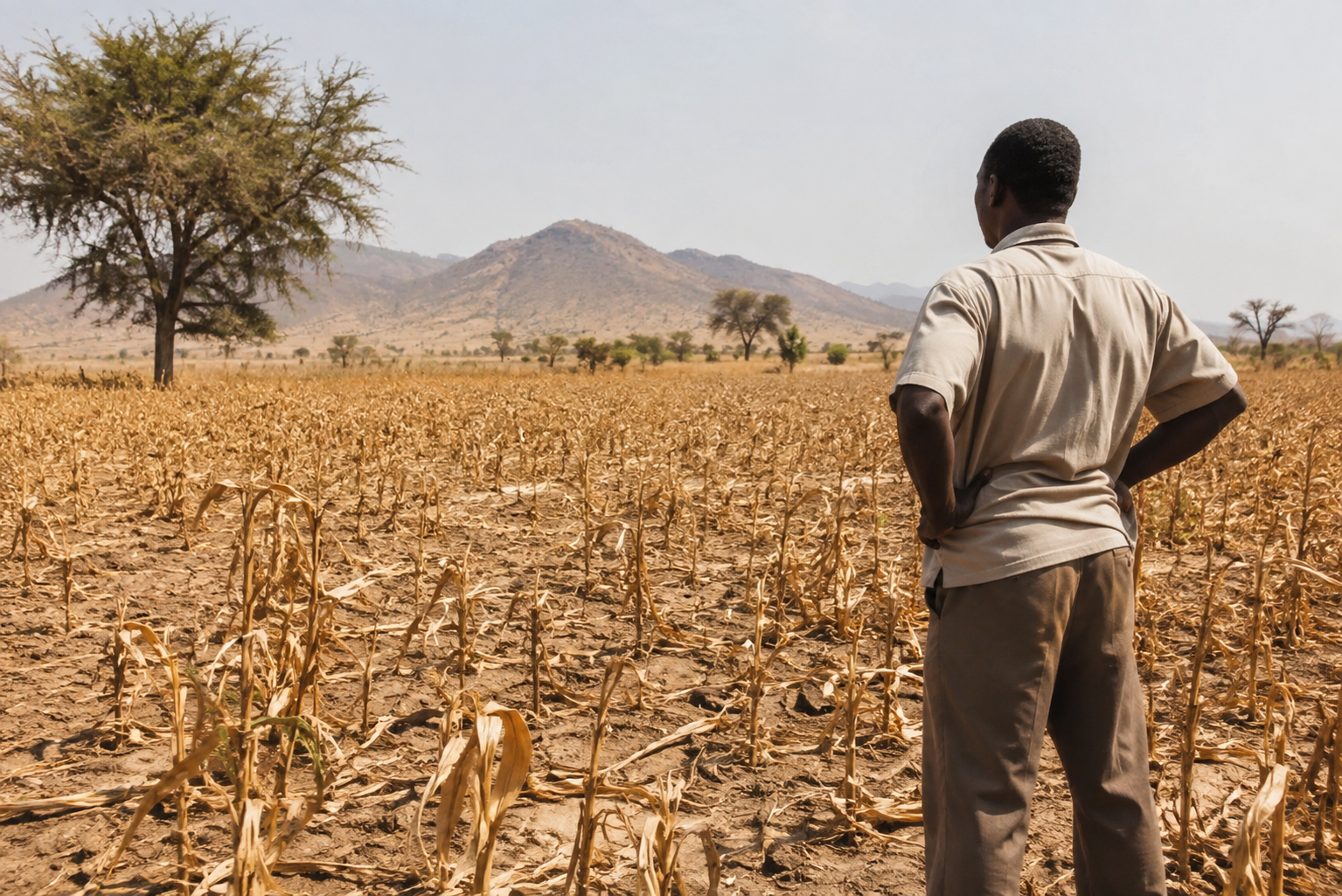
A developing El Niño is raising fresh concerns about rainfall, crop production, livestock feed and food security, putting African farmers on alert as they prepare for future farming seasons.
Climate conditions thousands of miles away in the Pacific Ocean may soon have consequences for farmers across parts of Africa.
A developing El Niño is attracting increasing attention because of its potential to disrupt normal rainfall patterns and agricultural production. Southern Africa is particularly vulnerable to the dry conditions that can accompany some El Niño events.
For farmers, this isn’t simply a weather story.
It could become a feed, water, production and profitability story.
Why El Niño Matters to African Agriculture
El Niño is a recurring climate pattern associated with unusually warm surface waters in parts of the tropical Pacific Ocean.
Although it begins far from Africa, changes in atmospheric circulation can influence weather patterns around the world.
Its effects aren’t identical everywhere, and an El Niño event doesn’t automatically mean drought in every African country. However, parts of Southern Africa have historically experienced hotter and drier conditions during significant El Niño periods.
That matters in a region where millions of farmers depend heavily on rainfall.
When rainfall becomes insufficient or unpredictable, the effects can move quickly through the agricultural economy.
Crops may struggle.
Pastures can deteriorate.
Water sources may come under pressure.
And livestock farmers may suddenly find themselves paying more for feed.
The Food-Security Concern
The potential consequences extend beyond individual farms.
The World Food Programme has warned that a strong El Niño could contribute to worsening food insecurity globally, particularly in countries already dealing with climate shocks, conflict, high food prices and economic pressures.
For African countries heavily dependent on rain-fed agriculture, another period of poor rainfall could be especially difficult.
Lower harvests can reduce the amount of food entering local markets.
When supply falls while demand remains strong, prices can rise.
That means a rainfall problem on the farm can eventually become a food-price problem for families hundreds of miles away.
Livestock Farmers Should Pay Attention Too
Crop farmers aren’t the only ones exposed.
Livestock producers can feel the consequences of prolonged dry conditions through declining pasture quality and reduced availability of water.
As natural grazing becomes scarce, farmers may become increasingly dependent on purchased feed.
And when many farmers are looking for the same feed at the same time, prices can rise rapidly.
This is why preparation before a shortage develops can be more valuable than reacting after one has already started.
What Can Farmers Do?
Farmers cannot control El Niño, but they can reduce some of their exposure.
For livestock farmers, this may be a good time to evaluate available feed reserves and begin thinking about preserving crop residues, hay and other suitable feed materials while they remain available.
Water planning is equally important.
Farmers should inspect boreholes, storage tanks, ponds and other water sources before conditions become difficult.
Herd size should also be considered carefully. Expanding livestock numbers aggressively when future feed and water availability is uncertain can create additional financial pressure.
Crop farmers may need to pay closer attention to seasonal forecasts, planting dates, crop varieties and soil-moisture conservation practices.
The appropriate response will vary considerably by country and farming system.
Don’t Panic—Plan
One important point should not be lost in the headlines:
El Niño does not mean every African farmer will experience drought.
Africa is enormous, and rainfall patterns differ substantially between regions.
Some areas can experience reduced rainfall while others receive normal—or even unusually heavy—rain.
Farmers should therefore avoid making major decisions based solely on general international forecasts.
Local meteorological information and agricultural-extension guidance remain extremely important.
But uncertainty itself is a reason to prepare.
A farmer with stored feed, reliable water and good production records is generally in a stronger position to respond to changing conditions than one forced to make emergency decisions.
A Bigger Lesson for African Agriculture
The El Niño discussion highlights a challenge African agriculture will continue to face: farming is becoming increasingly dependent on information.
Successful farming is no longer only about owning land or livestock.
Weather data matters.
Feed costs matter.
Water management matters.
Farm records matter.
Market information matters.
And knowing about a potential problem before it reaches the farm can sometimes make the difference between manageable losses and a financial crisis.
African farmers have always adapted to difficult conditions.
Better access to information can make that adaptation faster and more effective.
The Ajile Farms Takeaway
Farmers shouldn’t wait for empty dams, expensive feed or failing pastures before thinking about drought preparedness.
Watch the weather. Protect your water. Build feed reserves when possible. Keep good records. And plan before the emergency arrives.
The weather may be beyond a farmer’s control.
Preparation isn’t.
Ajile Farms will continue monitoring important agricultural developments across Africa and explaining what they could mean for farmers, livestock producers and

Leave a Reply